
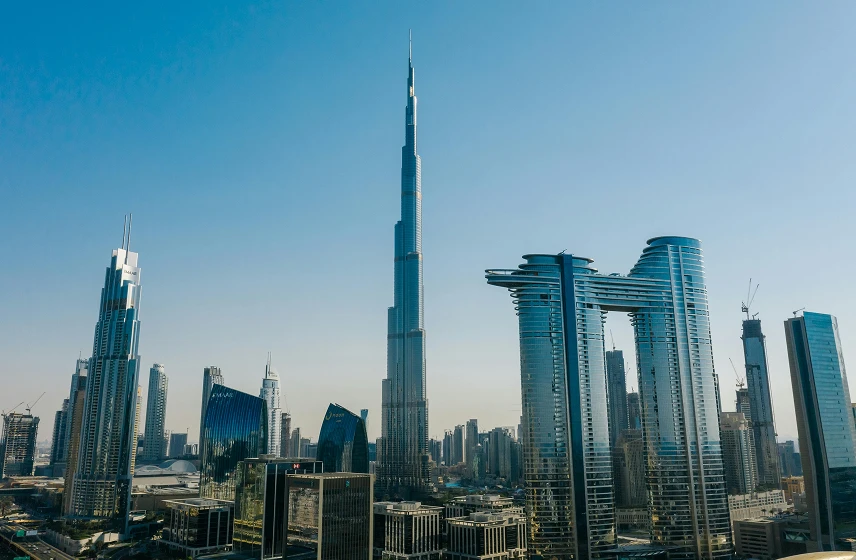
The UAE's property market has faced geopolitical shocks before. Each time, investors who understood the historical context made better decisions than those who reacted to fear. With the Iran-US-Israel conflict now directly impacting UAE soil in 2026, it's worth looking at what history actually shows, because the data is both sobering and reassuring.
The UAE's Own History of Stress Tests
Dubai's property market has survived several severe shocks over the past three decades. The 1990-91 Gulf War, triggered by Iraq's invasion of Kuwait, sent shockwaves through the Gulf region. Yet Dubai's economy recovered and continued its trajectory toward becoming a global hub. The 2008-2009 financial crisis was far more damaging: Dubai property prices fell approximately 50-60% in many segments, and the off-plan market froze entirely. Abu Dhabi stepped in with a bailout of roughly $20 billion to stabilize the situation. Recovery was slow, with prices not recovering meaningfully until 2013-2014. (Lion and Land, March 2026)
Historical pattern: After the 2022 Russian invasion of Ukraine, rather than damaging Dubai, the conflict accelerated capital inflows from Eastern Europe. Palm Jumeirah and Dubai Marina recorded some of their strongest transaction years precisely because of instability elsewhere. (Sherwoods Property, March 2026)
The Russia-Ukraine Precedent Is Instructive
The most recent comparable shock: Russia's invasion of Ukraine in February 2022, provides a useful parallel. Russian investors, fearing asset freezes and sanctions in Europe, moved billions of dirhams into UAE property. That episode demonstrated a defining feature of Dubai's market: external geopolitical instability often redirects capital toward the UAE, rather than away from it. Whether the Iran conflict follows the same pattern depends on its duration and whether the UAE itself continues to be targeted.
What the 2026 Data Shows So Far
Even amid active conflict, the UAE market has shown remarkable transaction resilience. Dubai recorded 36,831 real estate transactions between January 1 and March 8, 2026, up 7% from the same period in 2025. The median price reached AED 1,770 per square foot, a 14% year-over-year increase. Property viewing activity surged 75% in the final days of the first conflict week, a clear signal that serious investors were treating the downturn as a buying opportunity rather than a reason to exit. (The Middle East Insider, March 2026)
Abu Dhabi's Different Profile
While Dubai attracts most of the headlines, Abu Dhabi's market has a notably different risk profile. With a tighter supply pipeline and a demand structure more heavily weighted toward UAE nationals and GCC buyers, Abu Dhabi has historically shown greater price stability. Residential prices in Abu Dhabi rose approximately 32% year-on-year into late 2025, according to CBRE data. Abu Dhabi's sovereign wealth fund, ADIA, with estimated assets exceeding $900 billion, provides an ultimate financial backstop that no other city in the world can match.
What History Tells Buyers Right Now
The historical record across UAE markets is clear: short, contained conflicts create buying windows. Prolonged, escalating conflicts create genuine market corrections. The variable that matters most is not the war itself, but its duration and scope. Fitch Ratings' Anton Lopatin captured this perfectly: 'The effect on real estate values will depend on the conflict's scope and duration.' (CNBC, March 2026) For buyers with a 3-5 year horizon and available liquidity, every historical precedent suggests the current period rewards those who act with conviction rather than caution.
Sources: Lion and Land (March 2026), Sherwoods Property (March 2026), The Middle East Insider (March 2026), CNBC (March 2026), CBRE UAE Data (2025-2026).