
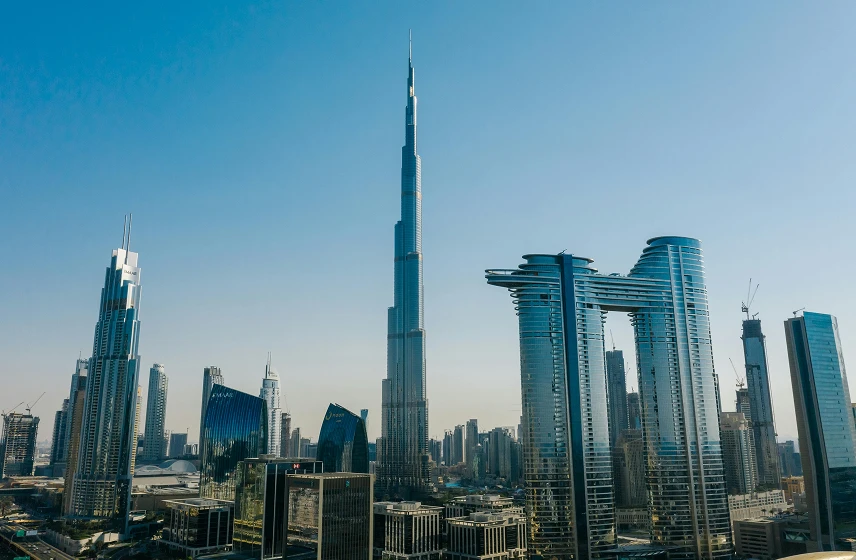
For the past decade, Dubai and Abu Dhabi have successfully sold the world a powerful proposition: that you can build a life, a business, and a property portfolio in the Middle East without the risks that come with the rest of the region. In 2026, that proposition is being stress-tested more seriously than ever before. What does the future of UAE real estate look like through and beyond the current conflict?
The Foundational Bet on UAE Property Has Not Changed
The long-term case for UAE real estate rests on fundamentals that no short-term conflict can erase. The UAE's population continues to grow, expatriates make up roughly 90% of the country's population, and that flow of skilled workers and investors has not stopped. The UAE's diversified economy, spanning financial services, technology, trade, tourism, and logistics, continues to expand. The IMF projects UAE GDP growth of 5% in 2026, outpacing the global average. And the government's track record of responding to economic shocks with decisive policy support is unmatched in the region.
Commercial Real Estate: A Bright Spot in the Conflict Period
While residential sentiment has wobbled, commercial real estate in Dubai's prime districts is performing strongly. DIFC and Business Bay are approaching full occupancy as regional firms and multinational companies relocate contingency operations to Dubai's free zones. Companies from conflict-affected markets are securing long-term office leases in the UAE as stable regional headquarters. This demand for commercial space has important knock-on effects for residential demand, as employees relocating to the UAE need housing. (MapHomes Real Estate, March 2026)
Commercial signal: 'Dubai properties are priced at roughly half of Tel Aviv equivalents while delivering superior rental yields, the value case is undeniable.' (MapHomes Real Estate, March 2026)
The Golden Visa Remains a Powerful Demand Driver
Dubai's Golden Visa programme, which grants a 10-year renewable residency visa to buyers of property worth AED 2 million or more, remains fully operational. For buyers across Europe, South Asia, and GCC countries, this programme makes UAE property not just an investment but a life insurance policy: security of residency in a stable jurisdiction. Sherwoods Property (March 2026) notes that for many buyers right now, 'the property is the vehicle and the residency is the destination.'
The Supply Pipeline: Calibrating the Risk
With approximately 390,000 new residential homes expected in the UAE by 2030, supply management will be critical to the market's long-term health. PropertySearch.ae (March 2026) notes that the UAE property market is 'entering a more complex phase,' with developers 'placing liquidity and balance-sheet resilience at the top of their agendas.' The bond market disruption documented by Bloomberg (March 2026) may actually serve a corrective function, slowing the pace of new launches and preventing the oversupply scenario that JPMorgan warned about.
Long-Term Outlook: Resilience Over the Cycle
The future of UAE real estate amid Middle East tensions is one that rewards patient, informed investors over reactive ones. The market will pass through this conflict, as it has passed through every previous shock in its history. Buyers who focus on communities with genuine lifestyle appeal, strong rental absorption, and proximity to employment hubs will be well positioned. Those who dismiss the risks entirely or panic entirely will both make mistakes. The truth, as always, is in the data, and right now the data says the UAE's structural story remains intact.
Sources: MapHomes Real Estate (March 2026), Sherwoods Property (March 2026), PropertySearch.ae (March 2026), Bloomberg (March 2026), IMF World Economic Outlook (2026).