
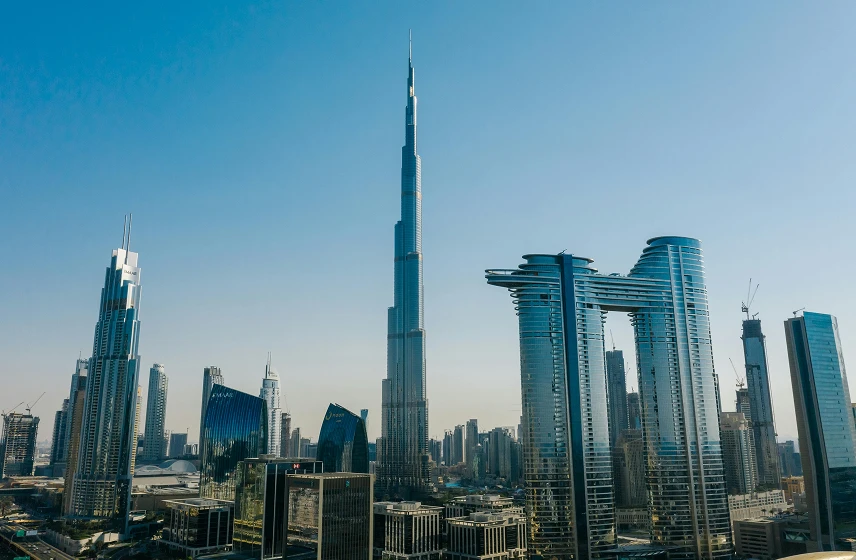
In any market, the 4 P's of real estate, Price, Product, Place, and Promotion, guide sound investment and buying strategy. In the UAE in 2026, with Iranian missiles having struck near Dubai landmarks and Abu Dhabi infrastructure, each of these four principles has shifted in ways that every buyer and investor needs to understand. Here's how the Iran conflict is rewriting the rules.
1. Price: A Two-Track Market Has Emerged
War creates pricing divergence. In the UAE right now, two very different pricing realities exist side by side. In high-supply areas with speculative inventory, certain off-plan communities in Jumeirah Village Circle or Mohammed Bin Rashid City, sellers are facing genuine pressure and becoming more negotiable. In supply-constrained, high-demand communities, Palm Jumeirah, DIFC, Dubai Marina, Abu Dhabi's Saadiyat Island, asking prices have held firm or even risen, reflecting both seller confidence and genuine scarcity. Buyers who understand which track applies to their target property hold a significant negotiating advantage right now.
Price signal: In prime and luxury Dubai developments, sellers are 'matching, and at times increasing, asking prices above pre-conflict levels', a clear signal of where seller confidence is strongest. (APIL Properties, March 2026)
2. Product: Security and Self-Sufficiency Now Command Premiums
Conflict reshapes what buyers value in a property. In the UAE's current environment, features that represent security, privacy, and self-sufficiency are gaining importance. Gated communities, properties with backup power infrastructure, larger units suitable for extended family arrangements, and branded residences that include hotel-standard security are all seeing heightened interest. Demand has shifted toward larger furnished units, particularly 3-bedroom apartments, as families relocating from conflict-adjacent markets seek longer-term accommodation arrangements in the UAE.
3. Place: Not All Emirates Are Equal
Location has always been the most important variable in UAE real estate. The conflict has made that more pronounced than ever. Abu Dhabi, with its more conservative supply pipeline, government backing, and slightly more removed position from the conflict's direct impacts, is showing greater price resilience than Dubai. Within Dubai, communities near strategic infrastructure that was targeted have experienced additional sentiment pressure. DIFC and Business Bay are performing strongly due to corporate demand. Waterfront communities with proven rental demand are holding value better than inland developments with high supply.
4. Promotion: Data Over Narratives, Transparency Over Spin
In a market experiencing genuine uncertainty, property marketing must evolve. Buyers are no longer buying the dream, they are buying the data. LuxuryProperty.com (March 2026) captured this shift perfectly: buyers are now 'less rushed, more analytical, wanting to understand not just what a property is worth today, but how it might behave if the conflict drags on.' Developers and agents who provide honest market assessments, clear transaction data, credible risk disclosures, and evidence-backed pricing will win. Those who oversell certainty will lose credibility quickly in a buyer pool that has become much more sophisticated.
Applying the 4 P's Right Now
For any UAE property decision in March 2026: verify price against recent comparable sales, not peak-2025 asking prices. Prioritise products in secured, well-managed developments with genuine lifestyle infrastructure. Assess place through the lens of supply-demand balance and conflict proximity, not just views and finishes. And seek out agents and developers whose promotion is grounded in current DLD transaction data and honest market analysis. The 4 P's haven't changed, but in conflict conditions, getting them right matters more than ever.
Sources: APIL Properties (March 2026), LuxuryProperty.com (March 2026), MapHomes Real Estate (March 2026), PropertySearch.ae (March 2026).