
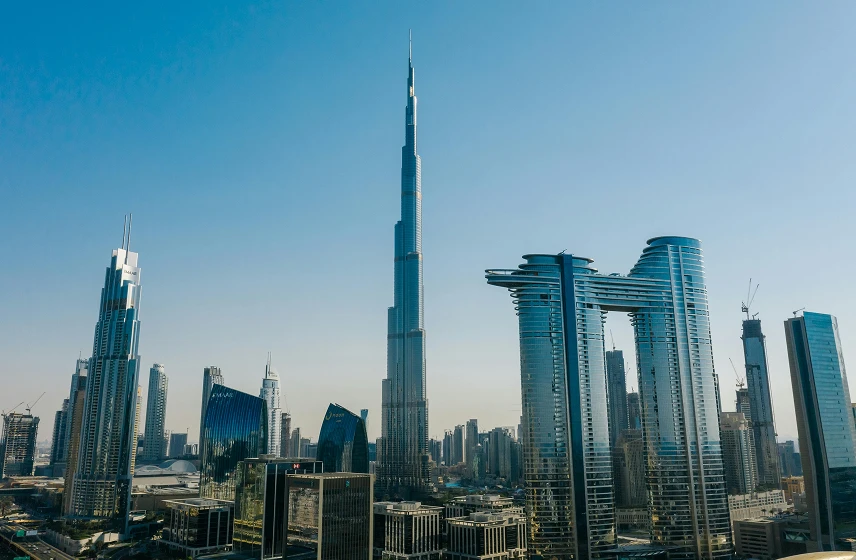
If you live in or invest in the UAE, you've felt the weight of the Iran-US-Israel conflict in a way that most of the world has not. Drone debris fell near the Burj Al Arab. Dubai International Airport was briefly disrupted. The Dubai Financial Market closed for two sessions. For the first time in modern memory, the physical security of the UAE has become a direct variable in any serious property analysis. So what does this war actually mean for the UAE real estate market?
The UAE Was Not a Bystander, It Was a Target
Unlike most global property markets that feel conflict through indirect economic channels, the UAE experienced this war firsthand. Iranian missile and drone strikes affected both Dubai and Abu Dhabi, including areas near Dubai International Airport and Zayed International Airport. Hotels, residential districts, and high-profile landmarks were affected. This matters because Dubai's entire property model is built on the confidence of international capital and confidence is exactly what came under attack.
Immediate Market Reaction: Sentiment, Not Structure
The good news is that the initial market reaction has been driven by sentiment rather than structural damage. The Dubai Financial Market Real Estate Index (DFMREI) dropped approximately 21%, falling from 16,700 to 13,353 by March 9, 2026 but this measures how developer stocks are trading on the exchange, not actual apartment or villa prices. Physical property transaction prices have declined by an estimated 5 to 8%.
Data point: Dubai recorded 3,570 property sales worth AED 11.93 billion in the week of March 2-9, 2026 alone showing the market continued to transact even at peak conflict tension. (APIL Properties, March 2026)
The Three Channels of War's Impact on UAE Property
War affects UAE real estate through three main channels. First, oil prices: the Strait of Hormuz, through which roughly 20% of global oil flows, sits at the UAE's doorstep. Any credible threat to that corridor spikes energy prices and feeds into inflation, construction costs, and borrowing rates. Second, international investor confidence: the UAE draws buyers from over 150 nationalities. When war headlines dominate, some of those buyers pause. Third, tourism and hospitality: Dubai's economy is deeply tied to visitor flows fewer tourists means lower hotel revenues and softer short-term rental yields.
What Has Not Changed
Zero property tax, the UAE dirham's peg to the US dollar, the 10-year Golden Visa programme, and Abu Dhabi's sovereign wealth backstop estimated at over $900 billion remain intact. Major developers like Emaar and Aldar continue to operate. Construction continues across the emirate with no project delays directly linked to the conflict. According to Abu Dhabi Commercial Bank economists, 'the UAE's economic fundamentals remain strong, and expatriate and non-resident buyers remain a crucial pillar of demand.'
Bottom Line for UAE Property Buyers and Investors
War has introduced genuine uncertainty into the UAE real estate market, but it has not broken it. The market is being tested more seriously than at any point in recent memory, and anyone who says otherwise is not being honest. But buyers with a long-term view, a clear budget, and a focus on fundamentals over headlines are operating in a market with real opportunity. As Adil Raza Khan, Chairman of APIL Properties and a 13-year UAE market veteran, put it: 'This is a pause, not a panic.'
Sources: Lion and Land (March 2026), Outlook Luxe (March 2026), The Middle East Insider (March 2026), APIL Properties (March 2026), Abu Dhabi Commercial Bank Research (March 2026), MapHomes Real Estate (March 2026).